

How Backpacks Are Made: Construction and Materials
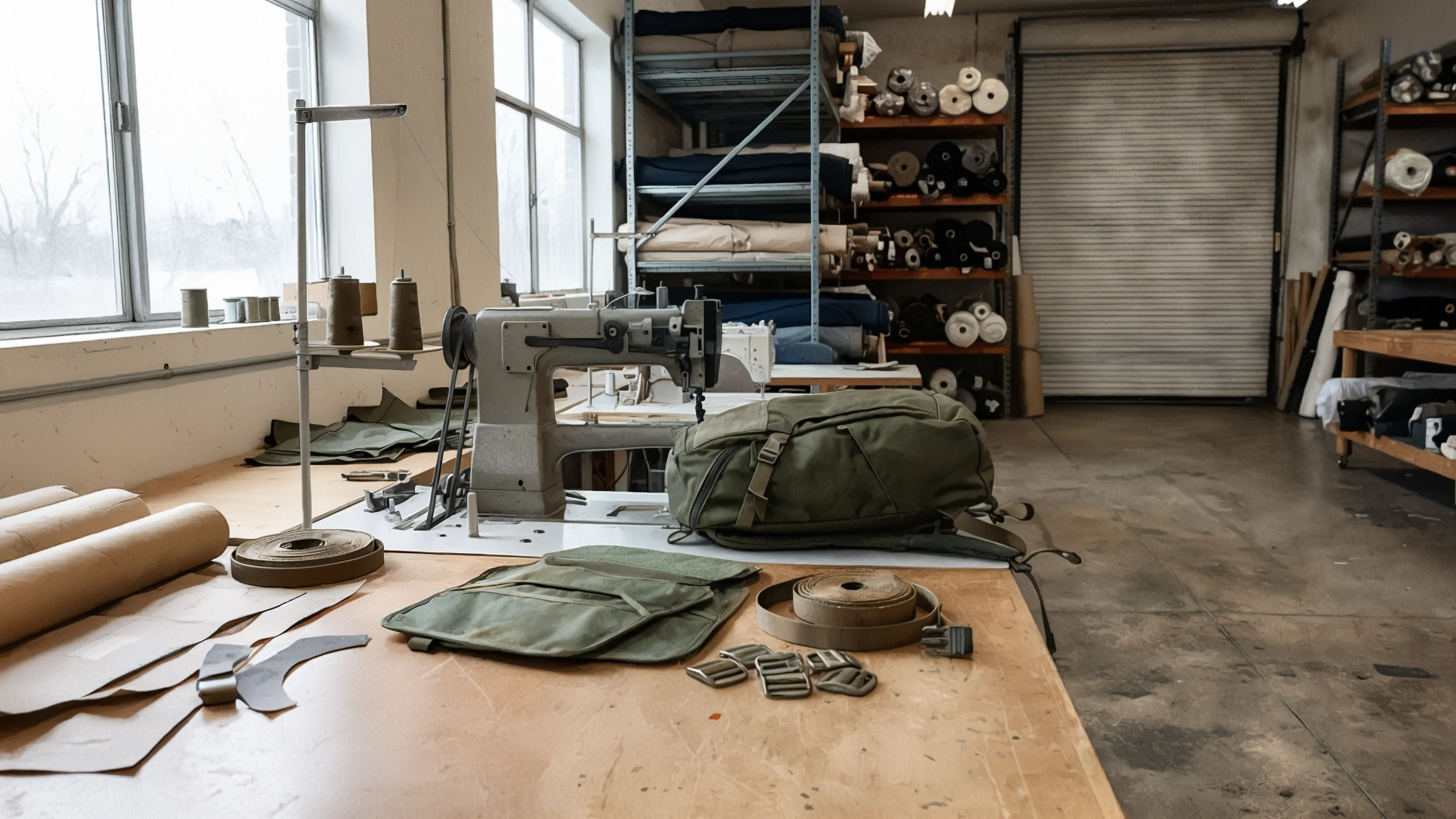
A backpack looks simple until you have to build one that survives being thrown in a trunk, soaked in rain, and loaded past its rating for three years straight. What makes it hold up is the fabric choice, the stitch sequence, and the hardware decisions made before a single panel gets cut.
The difference between a bag that holds up and one that does not is almost never the logo or the color. Here is how the build goes, from someone who runs the floor it happens on.
Picking the fabric before anything else
Every backpack starts with a fabric decision, and the decision is a tradeoff, not a search for the best material. Cordura is the name most people reach for when they say cordura backpack, and it earns the reputation: a tightly woven nylon built for abrasion resistance, available in different weights depending on how much weight and scraping the bag needs to survive. Heavier Cordura resists more, and it also costs more and adds weight, so a daypack and a load-bearing pack rarely use the same weight of the same fabric.
Ripstop nylon is the other common base for backpack fabric, built with a reinforcing grid woven into the fabric so a small tear stops at the grid line instead of running across the panel. It is lighter than Cordura at a comparable weight and cheaper, which is why it shows up constantly in ripstop nylon bags aimed at hiking and travel rather than tactical use. Neither fabric is objectively better. A fabric choice is a bet on how the bag will actually get used, and any useful answer to "what backpack materials should I use" always starts with that question, not a materials chart.
Cutting and the part nobody sees
Before a single sewing machine runs, the pattern gets cut from the fabric roll, and this stage decides more of the final quality than most founders expect. Panels cut off-grain stretch unevenly once the bag is loaded, which shows up months later as a pack that twists or sags on one side. A factory worth hiring lays patterns on-grain and nests them to minimize waste without compromising that alignment, which is a skill, not an automatic step.
This is also where reinforcement patches get added, at stress points the pattern anticipates before assembly: the base, the strap attachment points, the zipper pulls. Adding reinforcement after the bag is sewn is a repair. Adding it during cutting is construction.
The stitching sequence that matters
Assembly order is not arbitrary. Internal components, pockets, dividers, and organizer panels go in before the main shell closes, because there is no way to reach inside a sewn shell to add anything later. Structural seams, the ones carrying the load of a packed bag, get bar-tacked or double-stitched at the stress points rather than relying on a single straight line of thread.
- Box-X stitching at strap anchors spreads load across a wider area than a straight seam, which is the single most common failure point on a cheaply built pack.
- Bound seams on the main shell keep raw fabric edges from fraying with repeated flexing, especially on a bag that gets opened and closed daily.
- Bar tacks at zipper ends and strap junctions stop a seam from unraveling the moment one stitch fails, instead of the whole line coming apart.
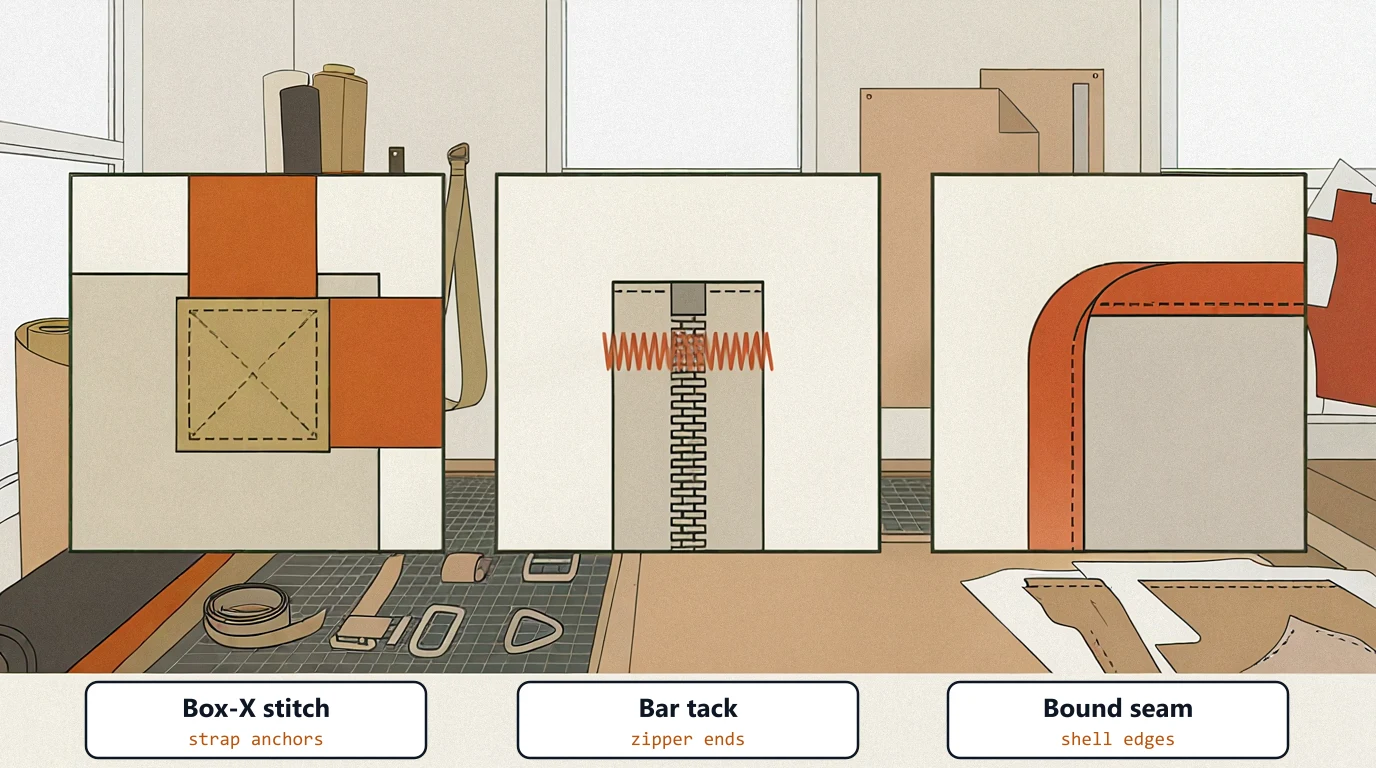
None of this is visible on a spec sheet that only lists fabric and dimensions. It is exactly what a real tech pack should call out, construction notes and all, because a factory quoting from dimensions alone will default to the cheapest stitch that technically closes the seam.
Hardware: the part that breaks first
Zippers, buckles, and webbing take more daily abuse than the fabric around them, and they are usually what fails first on a poorly built bag. A zipper pull that snags under load, a buckle that cracks in cold weather, webbing that frays at the stitch line: these failures happen long before the fabric itself wears through. Specifying hardware grade is not a cosmetic choice, it is a durability choice with its own cost curve, and it belongs in the same conversation as fabric weight, not an afterthought once the design is locked.
What this means if you are sourcing, not sewing
If you are the founder and not the factory, you do not need to become a construction expert. You need to ask for construction detail instead of accepting a spec sheet that stops at outer dimensions and fabric name. Ask which seams are reinforced and where. Ask what stitch type holds the strap anchors. A factory that answers in specifics is building deliberately. A factory that answers with "it will be fine" is guessing on your behalf, with your money.
What to do this week
If you are still at the sketch stage, list the three ways your bag is most likely to get abused in real use, loaded weight, weather, daily cycles, and let that list drive your fabric and hardware choices before you ever request a quote. If your product is a bag, a pack, a vest, or any technical soft good and you want a construction read on your design, tell me what you're trying to make.