

How to Find a Manufacturer for Your Product (and Vet Them)
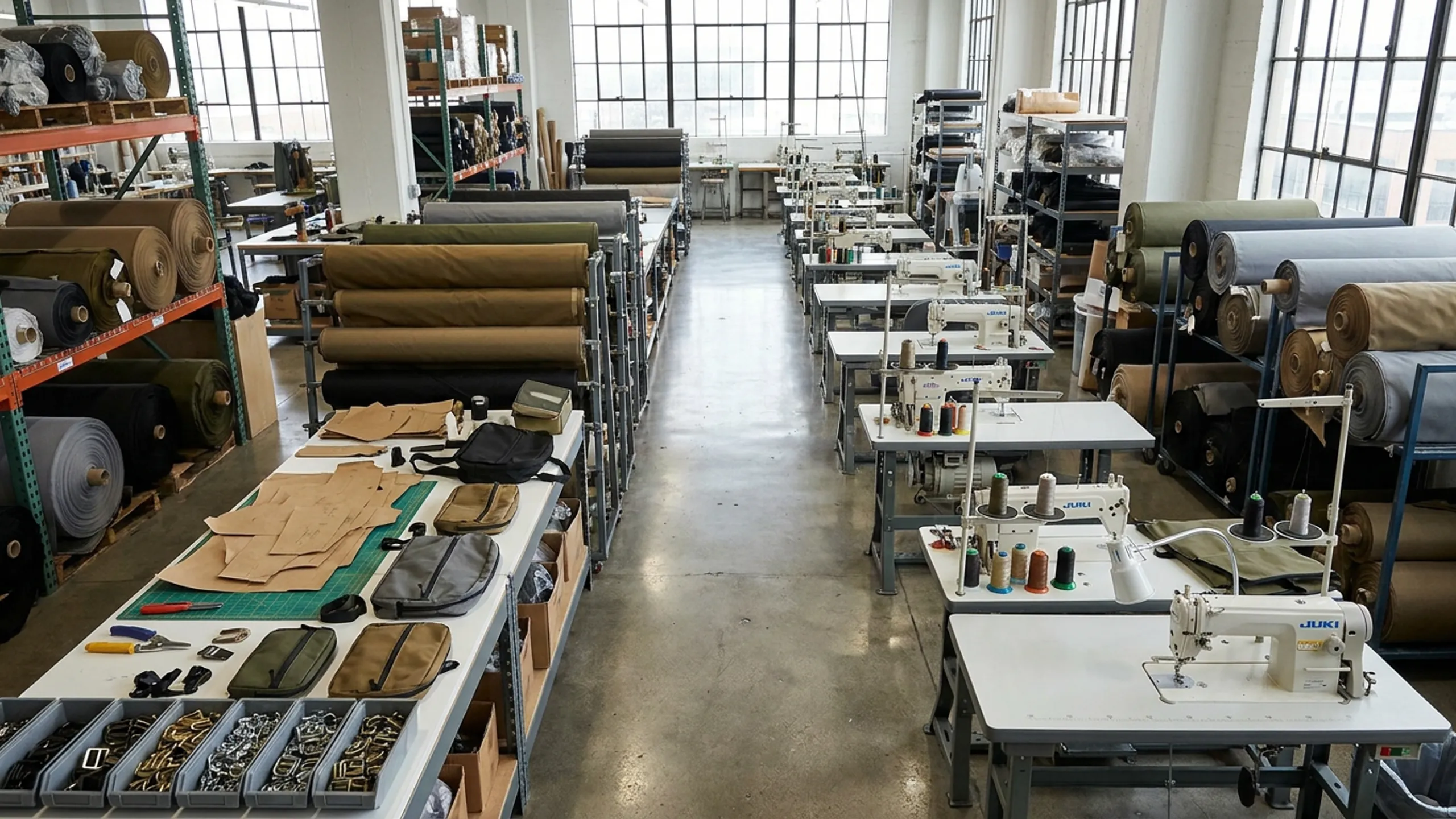
Finding a manufacturer for your product is mostly a filtering problem. There are thousands of factories that could sew your bag, and a search that starts with "who can make this" drowns in them. The search that works starts with what you are actually buying, runs on a short list of questions most middlemen cannot answer, and never hands your whole design to a stranger. Here is that search, from someone who sat on your side of it before moving to the factory side.
Decide what you are buying before you search
“A manufacturer” covers at least three different purchases, and mixing them up wastes months.
If you have a finished design with a complete tech pack, you are buying production capacity, and almost any competent factory in your product category can quote you. If you have a sketch and a prototype made on a home machine, you are buying development first: pattern work, material sourcing, sample rounds. Fewer shops do that well, and a pure production factory will quietly do it badly. And if you mainly want something existing with your logo on it, you are buying private label, which is a catalog purchase, not a manufacturing search.
Be honest about which one you are. The most common failure I see is a founder with a sketch interviewing production factories, and nobody in the conversation realizing they are talking about two different jobs.
Where the real searching happens
- The big directories. Alibaba and its cousins list everyone, which is the problem. A large share of “manufacturers” there are trading companies reselling factory capacity at a markup. Useful for surveying what exists, dangerous for choosing.
- Trade fairs. Walking a sourcing fair puts real product in your hands and real factory staff in front of you. One day at a fair beats a month of messaging.
- Referrals from adjacent brands. A founder one category over, big enough to have production but small enough to answer a message, is the single best source there is. Factories that treat small brands well get passed around quietly.
- Sourcing agents. An agent can genuinely shortcut the search, and plenty are honest. The structural problem is that most price as a percentage of your factory invoice, an invoice you never see. You cannot audit a markup that is invisible.
- Factory-direct. Slowest to research, and the only route where you know what the factory actually charges. It is the model I run, so discount my bias as you see fit, but the reasoning stands on its own: every layer between you and the sewing line adds cost and subtracts information.
Questions that expose a middleman in ten minutes
Whoever you are talking to, ask these before any money moves:
- Can we do a video call from the production floor? A factory says yes. A trading company schedules, delays, and offers a showroom.
- Will the quote be line-itemed? Materials, labor, packing, freight, each on its own line. A lump sum is where margins hide.
- Whose name is on the export paperwork? If it is not the name you are paying, you have found the middle layer.
- Who owns my patterns and tooling? The answer must be you, in writing. Anything else is a lock-in you will pay for at reorder time.
- What do you make most? A shop that mostly sews garments will struggle with a load-bearing pack. Category fit matters more than factory size.
None of these questions is rude. The good factories answer them all day, and the reaction to the list tells you nearly as much as the answers.
Run a paid sample before you commit
Quotes are opinions. A sample round is evidence. Pay for one, expect to pay a few hundred dollars for a technical sewn product, and watch two things: the questions and the calendar. A real factory reads your tech pack and comes back with questions, because a buildable document always leaves decisions open. Silence followed by a confident sample is how you get a beautiful wrong answer. And a shop that is late on one paid sample will be late on five thousand units.
While you are at it, ask about minimums early. MOQ disappointment at the quoting stage costs a conversation; discovering it after sampling costs the relationship.
Protecting the design while you shop
Two rules cover most of it. First, sign a manufacturing NDA with anyone who sees real detail. Serious factories sign them without drama, and a refusal is information. Just know what the paper does: an NDA binds the party who signed it and nobody else on earth.
Second, control the dose. Quoting needs a one-page spec: dimensions, materials, construction notes, target quantity. It does not need your full pattern set mailed to thirty strangers. Send enough to price, and save the complete tech pack for the shortlist you have already vetted. A patent filing, even a pending one, adds a legal spine an NDA cannot; that is its own subject and I wrote about what it costs separately.
What to do this week
Write the one-page spec, then build a shortlist of five candidates from at least two of the sources above. Send all five the same spec and compare the quotes line by line; the ones you cannot compare have already answered your real question. If your product is a bag, a pack, a vest, or technical soft goods of any kind, I will happily be one of the five: tell me what you’re trying to make.