

What a Bag Designer Does, and When You Actually Need One
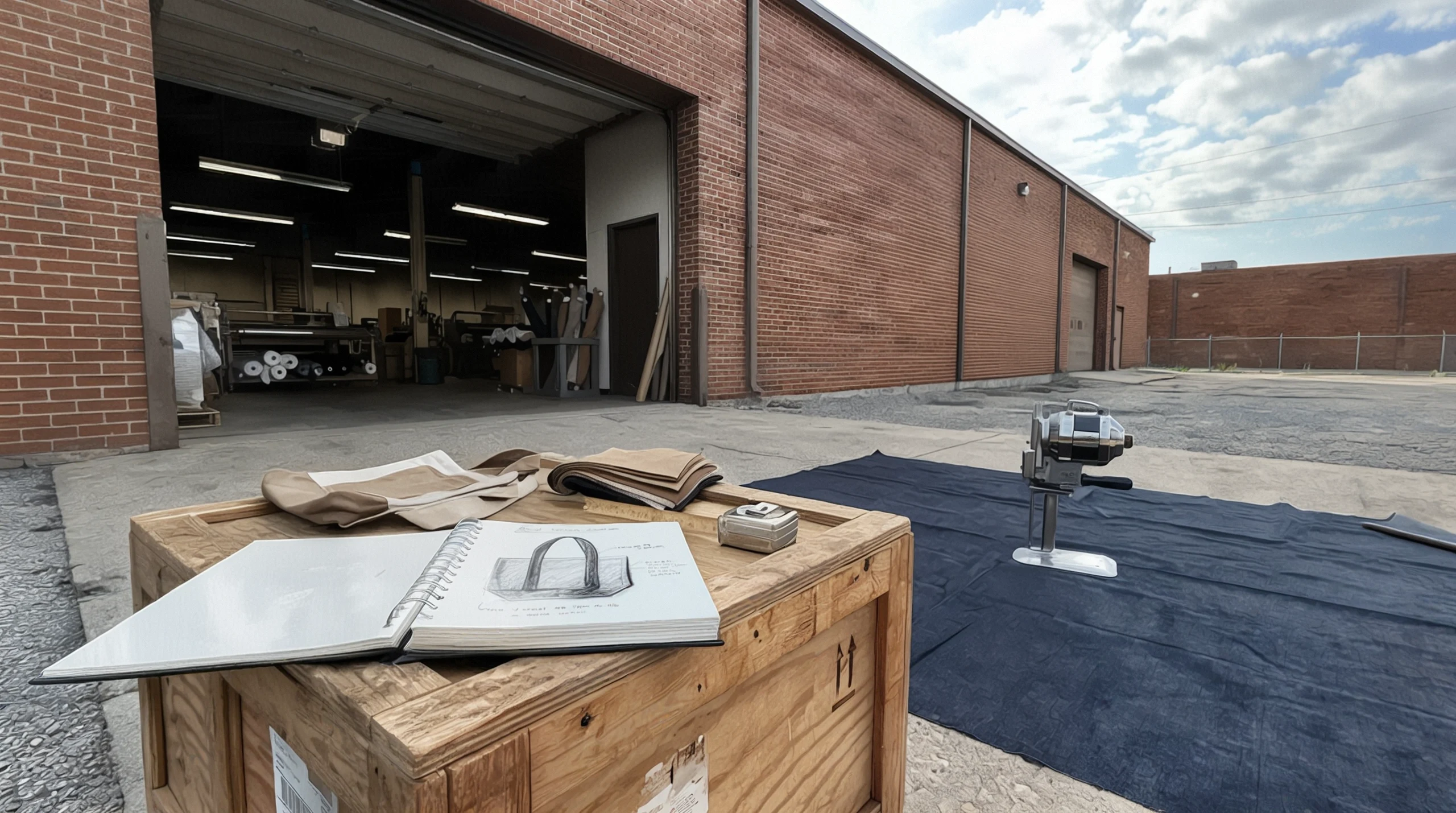
A bag designer turns a bag concept into a buildable spec: shape, materials, and construction details a factory can quote and build from. You need one the moment an idea has to become something a factory can price and build, not a prettier sketch.
That sounds obvious until you are the one trying to hire or become one. The title covers a lot of ground, and most of what decides whether a bag gets made well happens after the sketch, not during it.
What a bag designer actually does
The sketch is the smallest part of the job. A bag designer decides the shape and proportions, picks materials that match how the product will get used, works out where every seam, panel, and piece of hardware goes, and puts all of it into drawings precise enough for someone else to build from without guessing. A designer who stops at a pretty rendering has done maybe a third of the job.
The rest is construction literacy: knowing how a panel actually gets cut and sewn, which seam types hold up under load and which ones fail first, and where a design decision that looks fine on paper turns into a bag that falls apart in six months. backpack designer searches run into the same gap, usually because people assume design and engineering are the same skill. They are not.
Where design stops and engineering starts
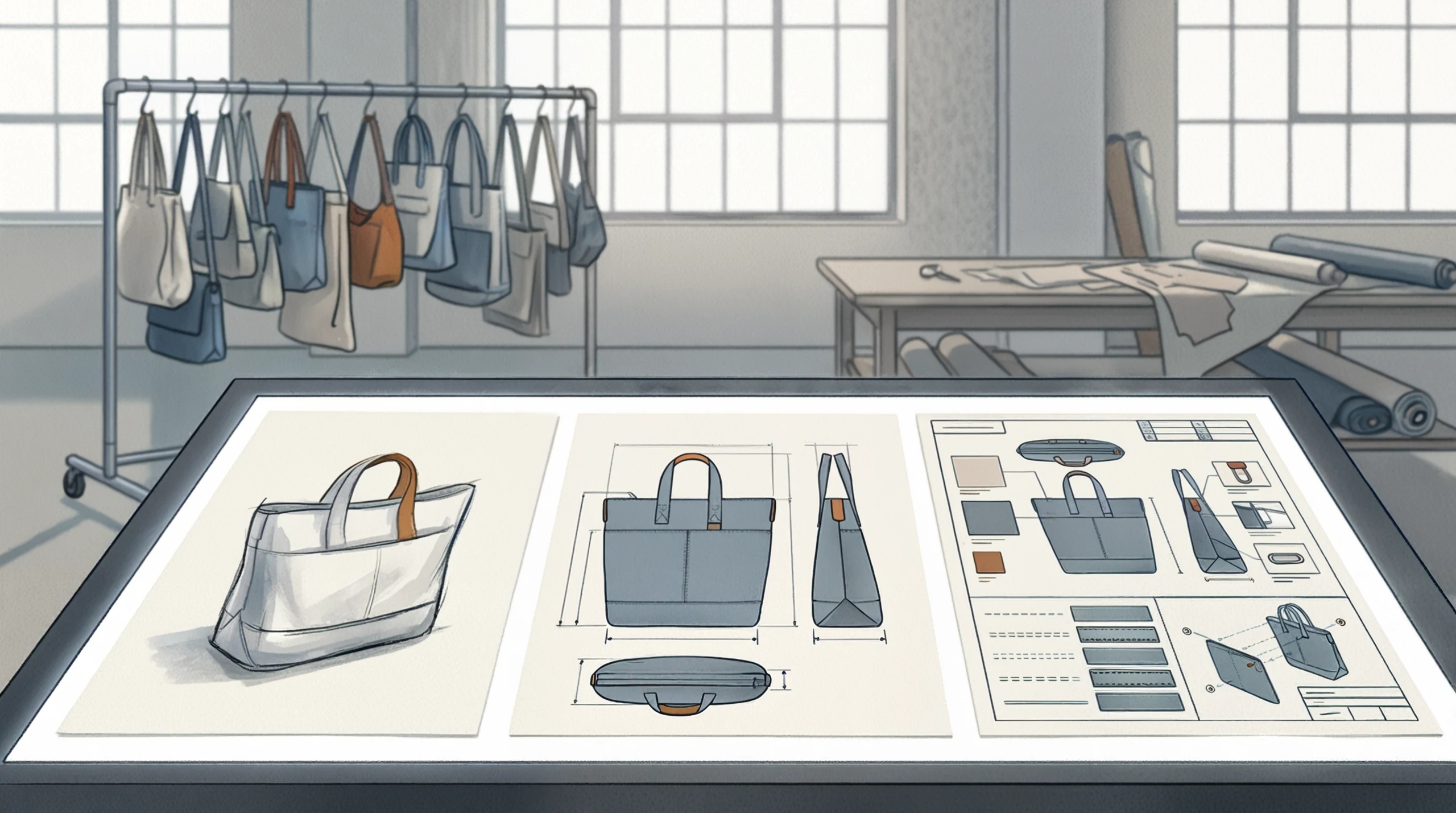
A design handoff moves from a sketch to a measured drawing to a tech pack, each one a concrete object the next stage builds from. The sketch sets the idea. The measured drawing fixes dimensions, seams, and hardware placement. The tech pack adds materials, tolerances, and construction notes a factory can actually quote and cut from. Skip a stage and the factory fills the gap with its own guess, which is rarely the guess you wanted.
This is also where a design flaw gets caught cheaply or expensively. A proportion that looks right on screen but puts the strap load somewhere the fabric cannot hold is a five-minute fix on a drawing and a failed sample two weeks later if nobody catches it until cutting.
In-house design versus a sourcing agent’s “design service”
A lot of sourcing agents offer design as a line item. What that usually means is they take your sketch, hand it to whichever factory they work with, and relay drawings back and forth without anyone on that chain actually owning construction decisions. You pay for the relay and a markup on top of the factory invoice you never see.
The alternative is a designer who also runs the floor the bag gets built on, so design decisions get made with the actual fabric, hardware, and machines in mind instead of an assumption about what any factory can do. That is the whole argument for one continuous line, design through production under one contract: fewer handoffs where a decision gets diluted, and you see the real factory invoice instead of a number with an agent’s margin folded in.
What a designer needs from you before they start
A designer cannot do useful work from “something like this but nicer.” Bring a reference for the category, even a competitor’s product you like one thing about. Say what the bag has to survive: daily commuting, checked baggage, a worksite, water exposure. Say your target price range and your realistic first-run volume, because both change the material and construction choices from the first drawing, not just the final quote.
product design company and soft goods manufacturing searches both show the same pattern: people arrive wanting a finished product, not a design process, and the process is what gets them there without three rounds of wrong samples.
What to do this week
If you are sitting on a sketch or a rough idea, write down what the product has to survive and what it has to cost before you talk to anyone. That one page saves more rework than any amount of back-and-forth on the drawing itself. If you want someone to take it from there under one contract, tell me what you’re trying to make.