

New Product Development: The Stages, Factory-Side
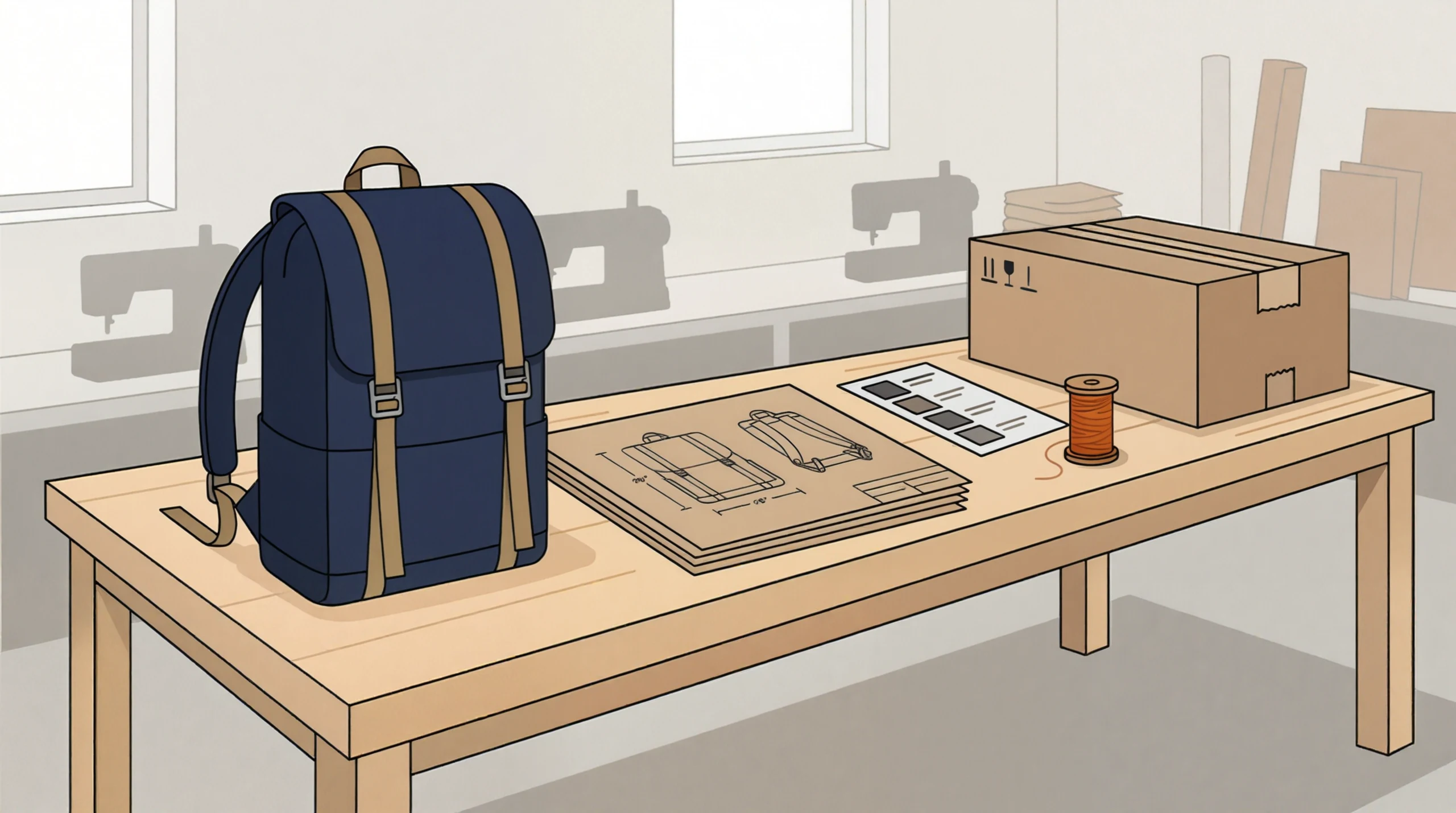
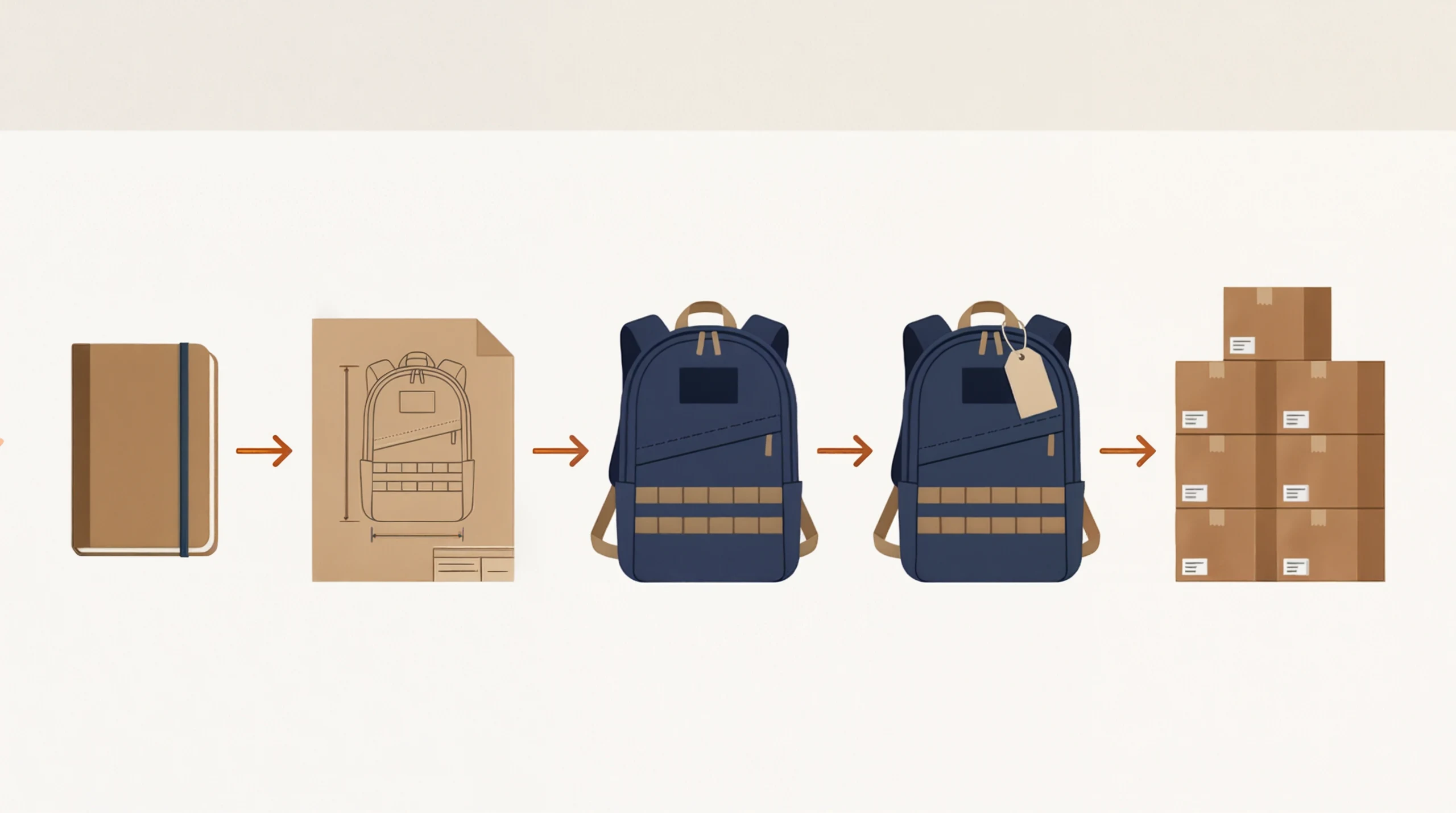
New product development is the work of taking a product from idea to its first production run. For a physical product it runs in six stages: a brief, design, a tech pack, samples, pre-production approval, and the first run. Each stage hands the next one something concrete to build from.
The business-school versions of this list are written for large product teams. Here is the same chain as it looks from the factory side, for a founder making a bag, a pack, or any other physical product.
Stage 1: the brief
The brief is one or two pages: who the product is for, what problem it solves, what it should cost to make, and what it must never do. A strong brief names the trade-offs early. Lighter or tougher? Cheaper or more durable? Every later stage settles arguments by going back to it.
Skip it and the product development process turns into a string of opinions, because nobody wrote down what "done" means.
Stage 2: design and drawings
Sketches turn into measured drawings: the shape, the panels, where each seam and pocket goes, and which hardware sits where. This is also the point to decide whether anything about the product is new enough to protect, because the patent drawings come from the same files. We cover that step in what patent pending means.
Stage 3: the tech pack
The tech pack is the document a factory builds from: every material, every measurement, every stitch type and every color callout. If a detail is not in the tech pack, the factory has to guess, and guesses come back as samples you did not want.
Stage 4: the product sample, and why there is more than one
The first product sample is where the drawings meet real fabric. It always shows something: a pocket that sits too low, a strap that twists, a seam that puckers on a curve. The fix goes back into the tech pack, and the next sample tests the fix. Our engagements include two samples for exactly this reason.
Pay attention to who makes the samples. A sample sewn in a separate sample room by a different team can hide problems that only show up on the production line.
Stage 5: pre-production approval
Before the run starts, the factory makes a pre-production sample from the actual production materials, on the actual line. You sign it off, and it becomes the reference every finished unit gets checked against. This is also when the order quantity gets locked in, which we explain in what MOQ means.
Stage 6: the first run
The first production run is where how to develop a product stops being a design question and becomes a manufacturing one. Cutting, sewing, hardware, quality checks against the approved sample, packing, freight. The first run teaches the line your product, so expect it to be the slowest one you ever make.
Going from idea to product is cheaper when one team owns every handoff. Each time the work changes hands between separate vendors, some of the detail gets lost, and you pay to find it again.
What to do this week
Write your brief. One page, with the trade-offs named: who it is for, what it should cost to make, and the one thing it must never do. Then check which stage you are actually in, because many founders are a stage behind where they think they are. If your product is a bag, a pack, a vest, or technical soft goods and you want one team to carry it through every stage, tell me what you're trying to make.